DISCOVER BASGAL: WHERE THE SILK LEGACY OF THE CAUCASUS LIVES ON
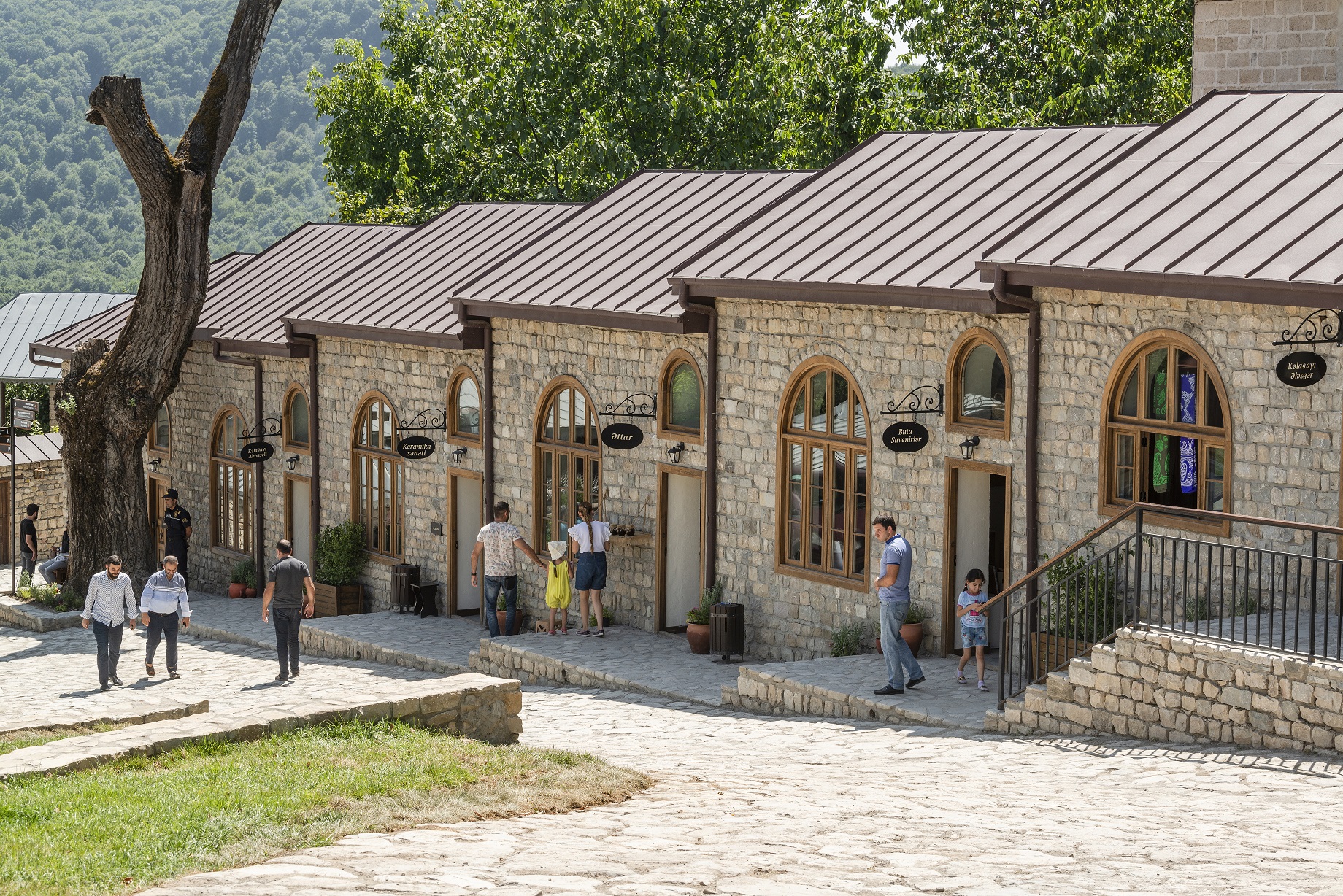
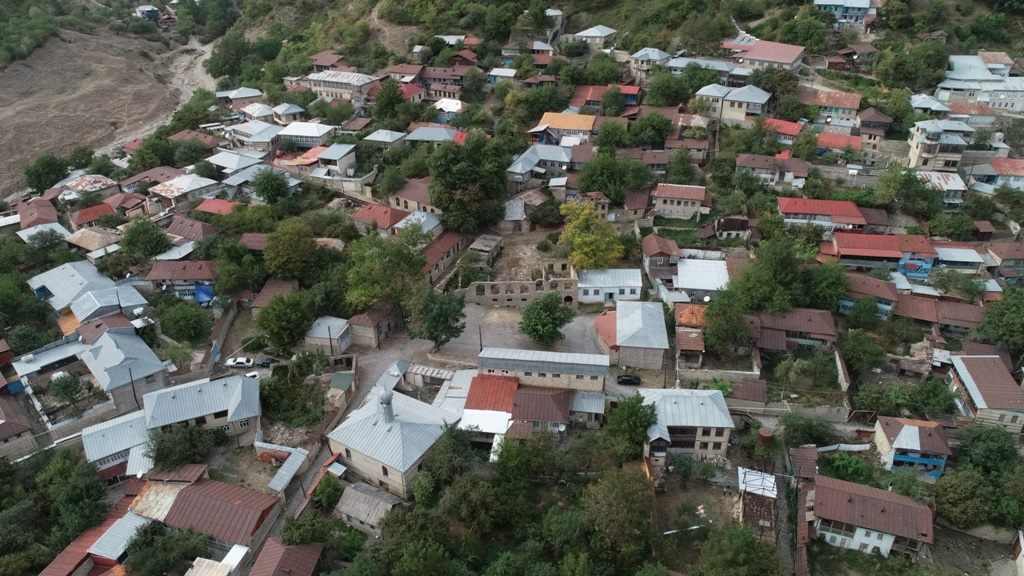
Embark upon exploring Basgal, a famous settlement of Ismayilli District, known for its historic fortress walls, architectural sites, kuraband - ancient sewage system, craftsmanship neighbourhoods, mosques, springs, ancient market square and narrow streets paved with river stones.
Situated on the southern slopes of the Greater Caucasus Mountains near the Niyaldag Mountain Range, Basgal is believed to derive its name from the combination of ‘bas’ and ‘gal,’ meaning ‘head fortress,’ ‘build a fortress,’ or ‘elevate the fortress’ in Azerbaijani. The graves and chest tomb monuments in Basgal Cemetery date back to the 16th-18th centuries, indicating the long-standing settlement of this area. Archaeological research conducted in Sheikh Muhammad Mosque proves that there has been significant habitation in the Basgal area since at least the 11th century.
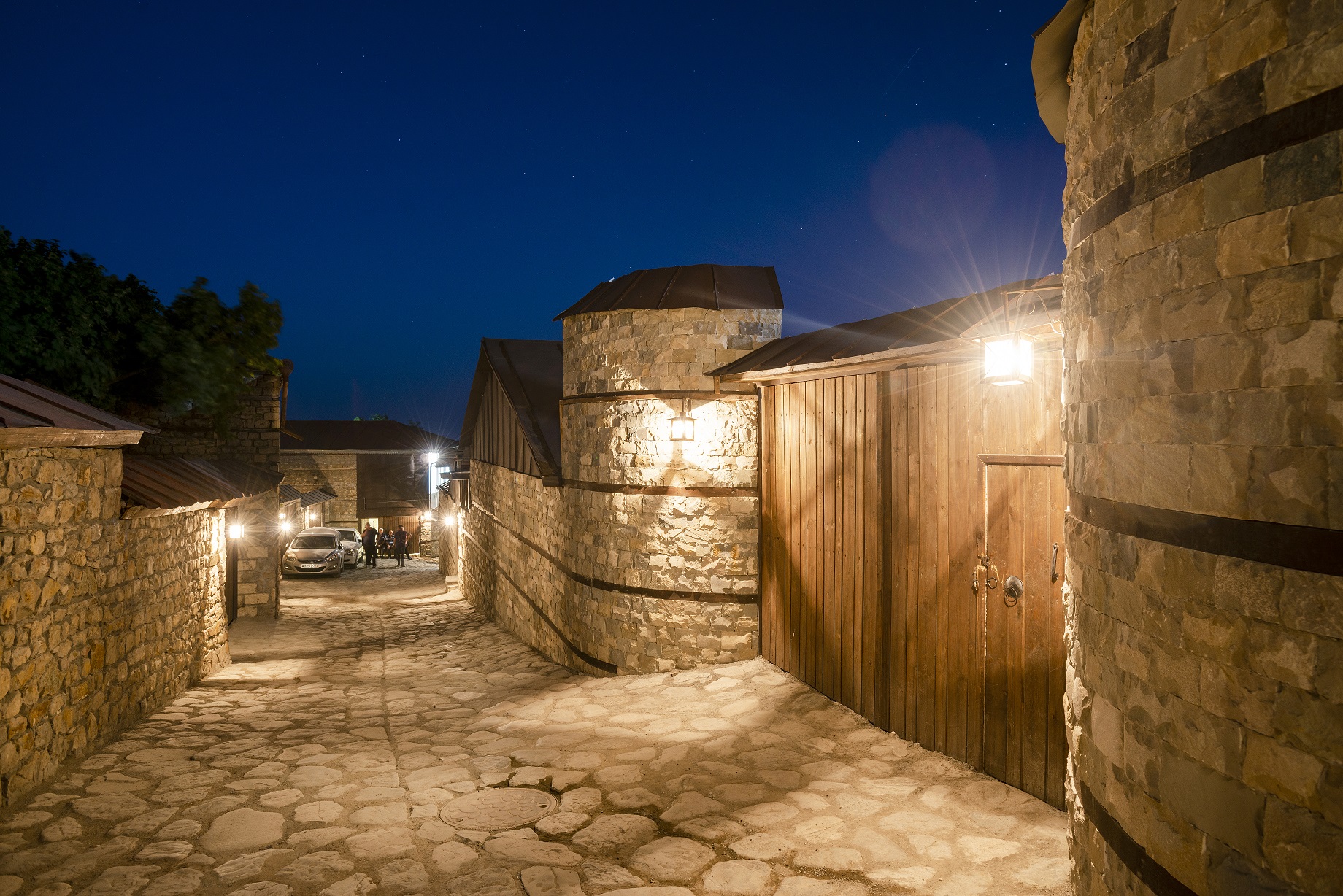
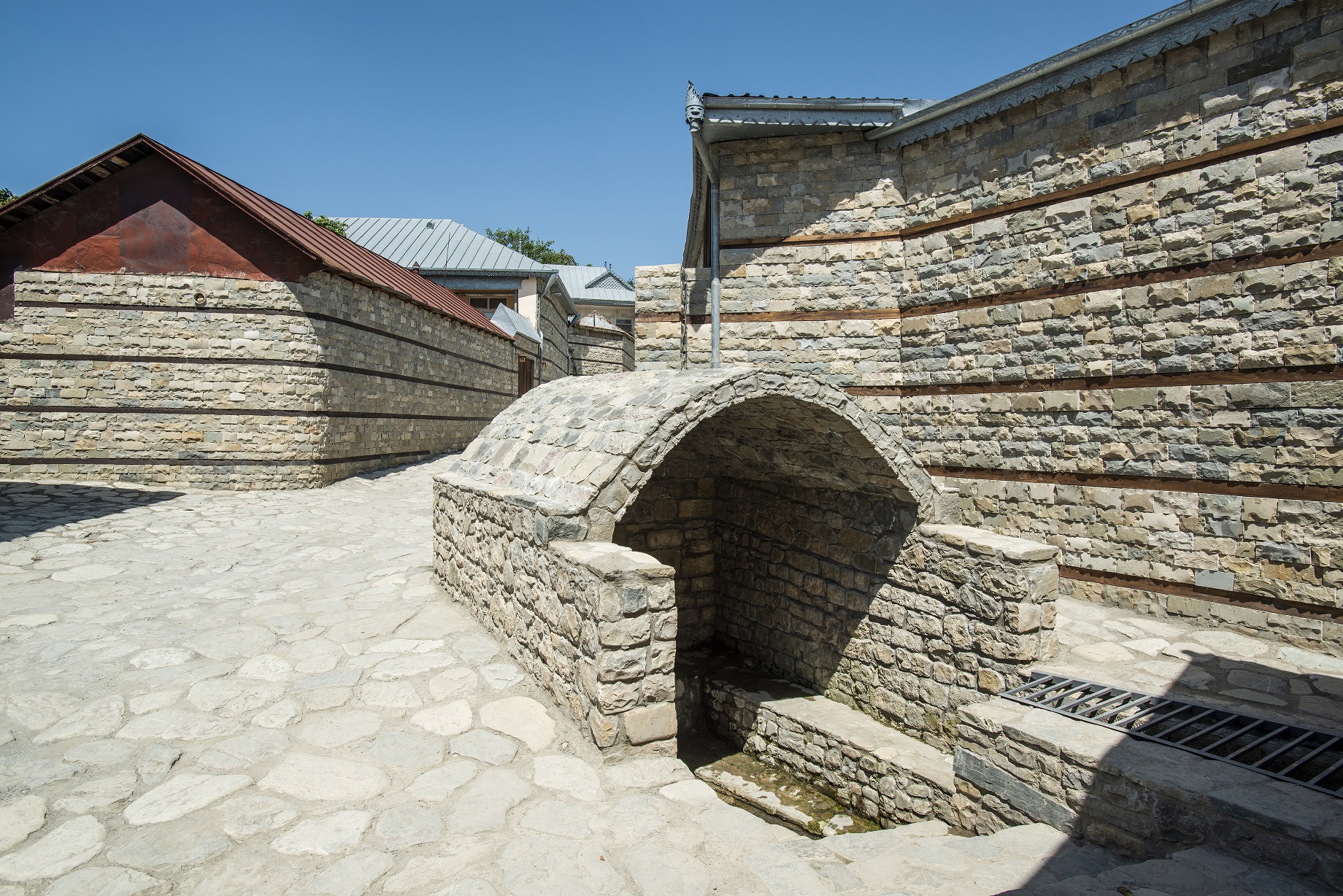
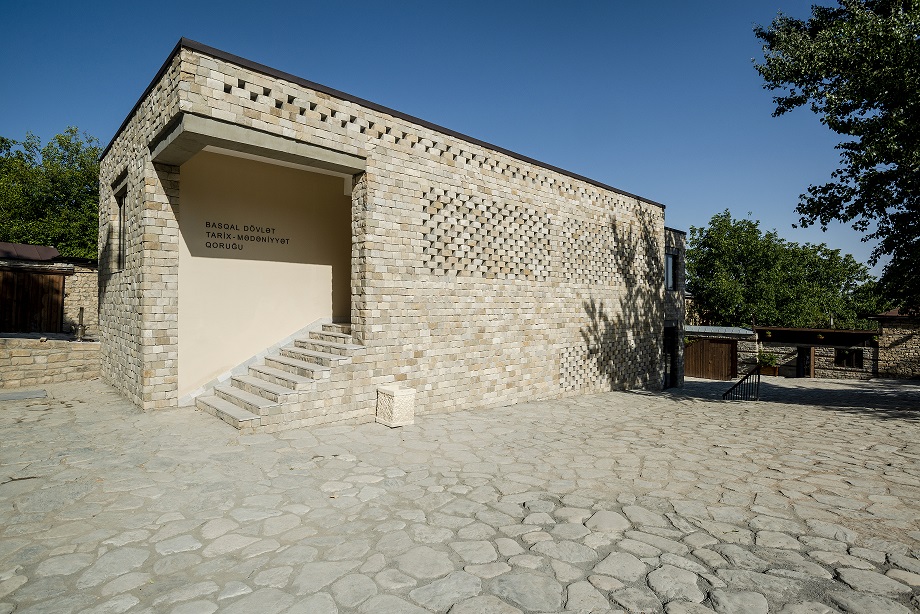
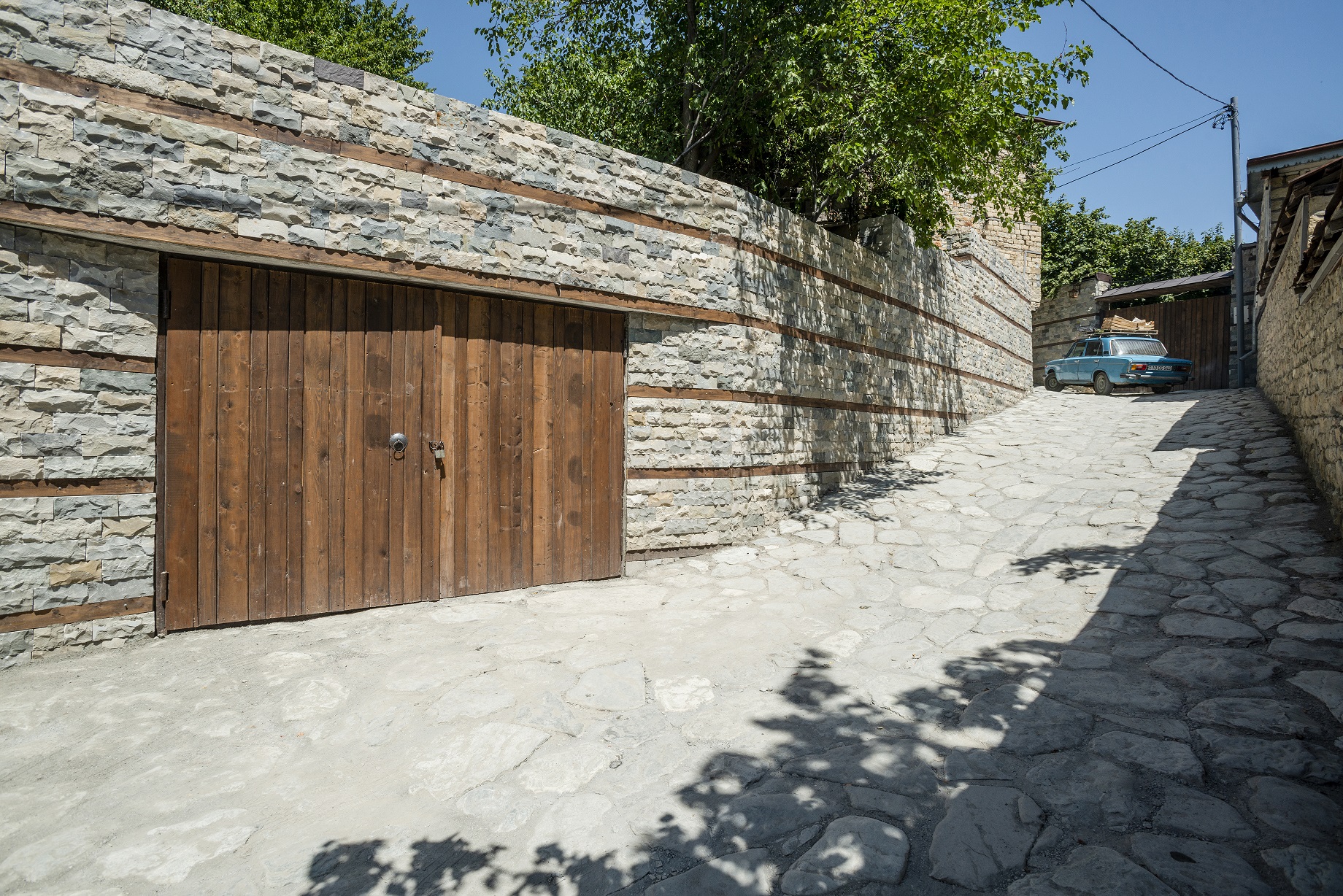
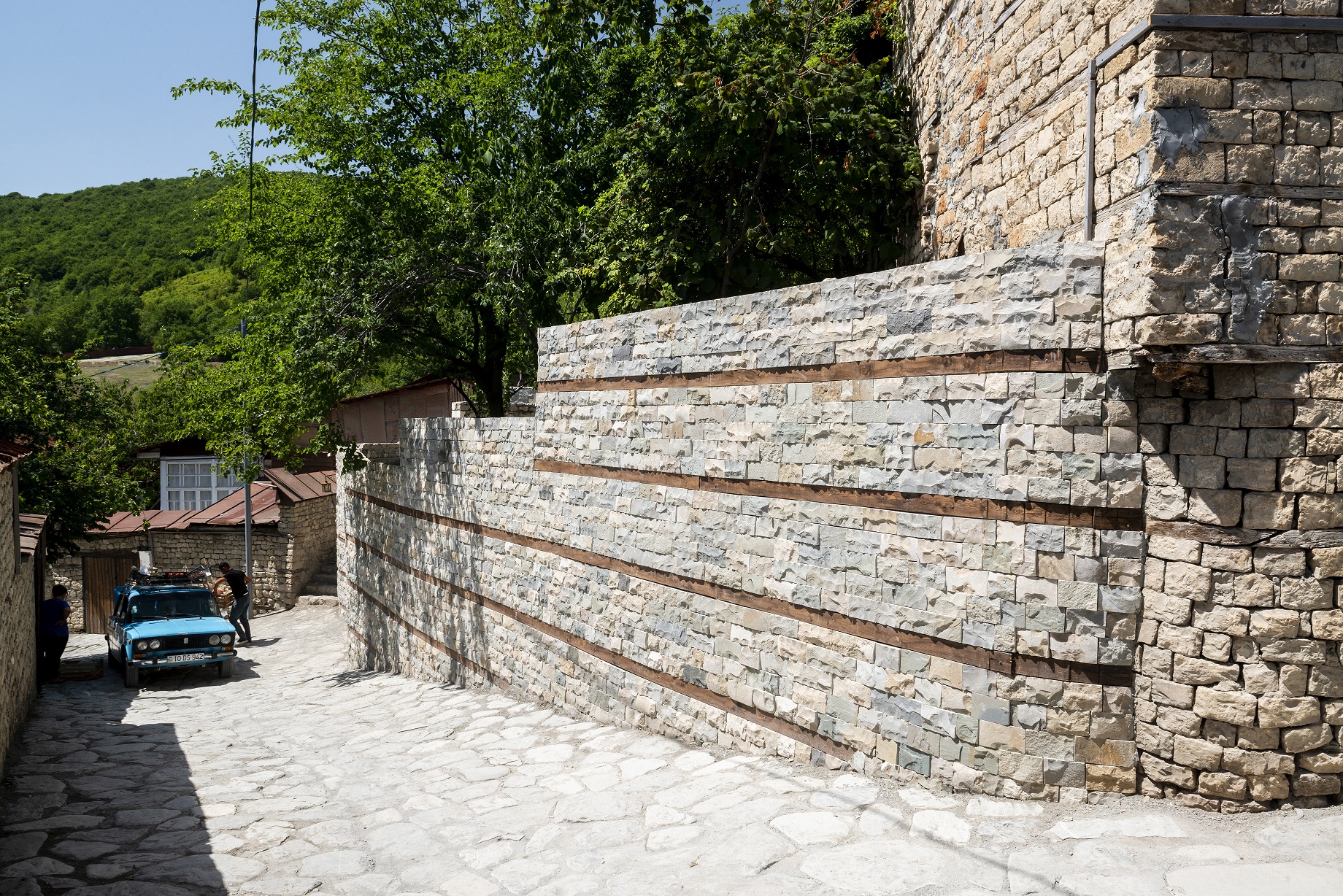
Architectural legacy: Basgal has preserved its historical architectural structure, network of cobbled streets and neighbourhoods to this day. Due to seismic activity in the Shirvan area, the earthquake resilience of buildings in Basgal was carefully taken into consideration. To increase elasticity, a ‘ketil’ (wooden belt) would be placed between every 4-5 layers of masonry stones. In that era, the corners of houses facing the street were not angular but in a cut-off shape, in order to prevent damage from vehicles. As an intriguing architectural element, gates were equipped with two types of knockers, dictating whether a man or a woman would answer the door.
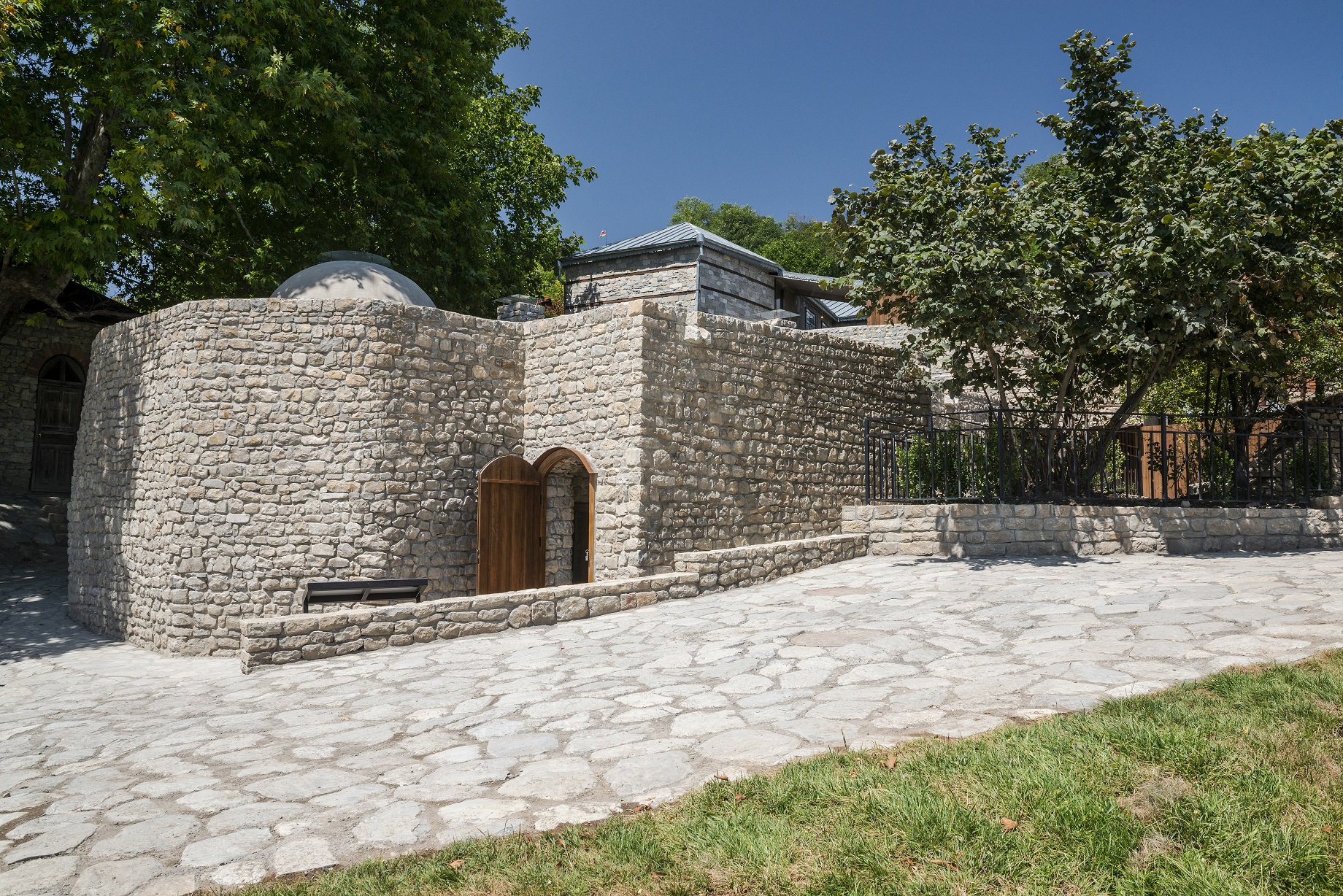
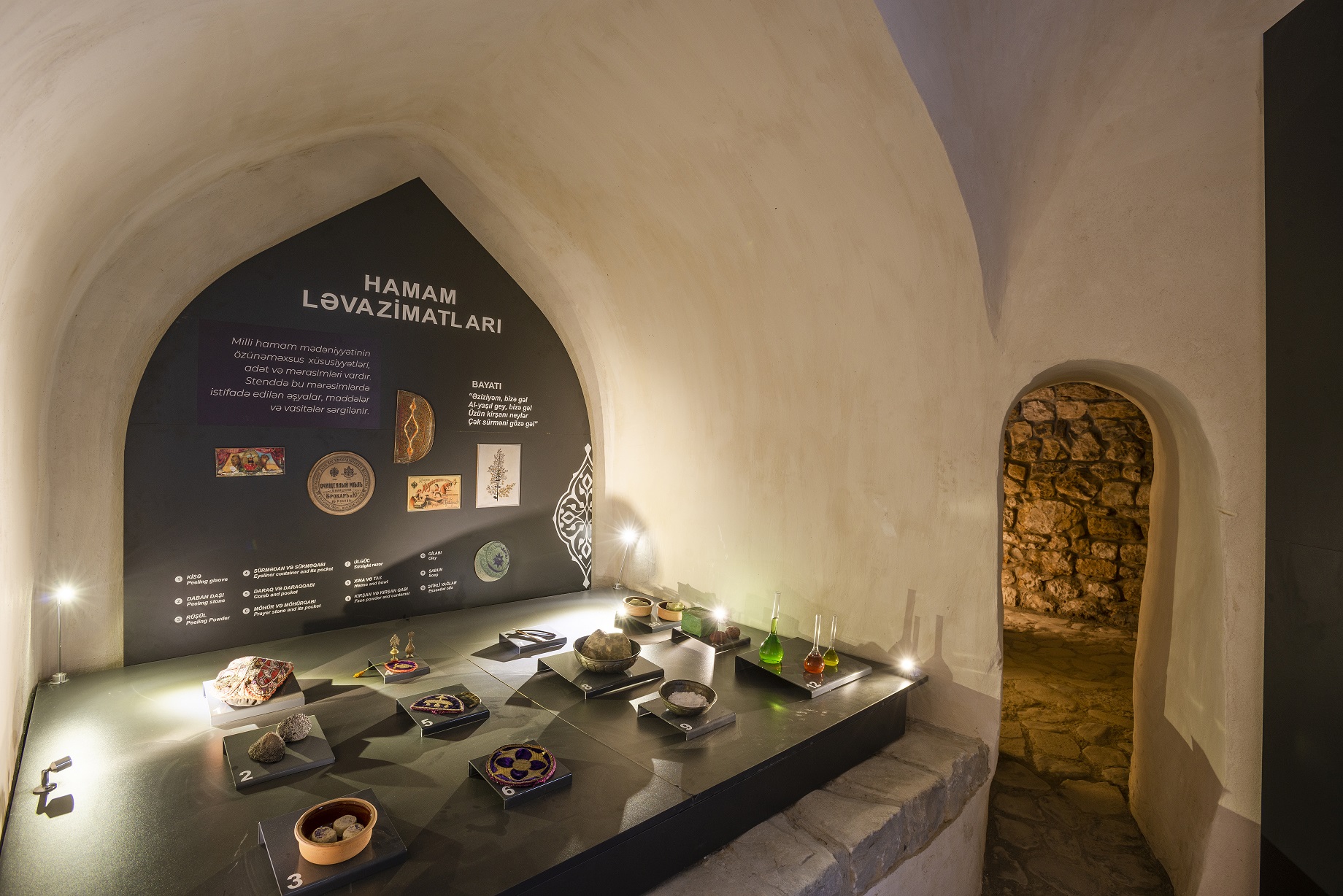
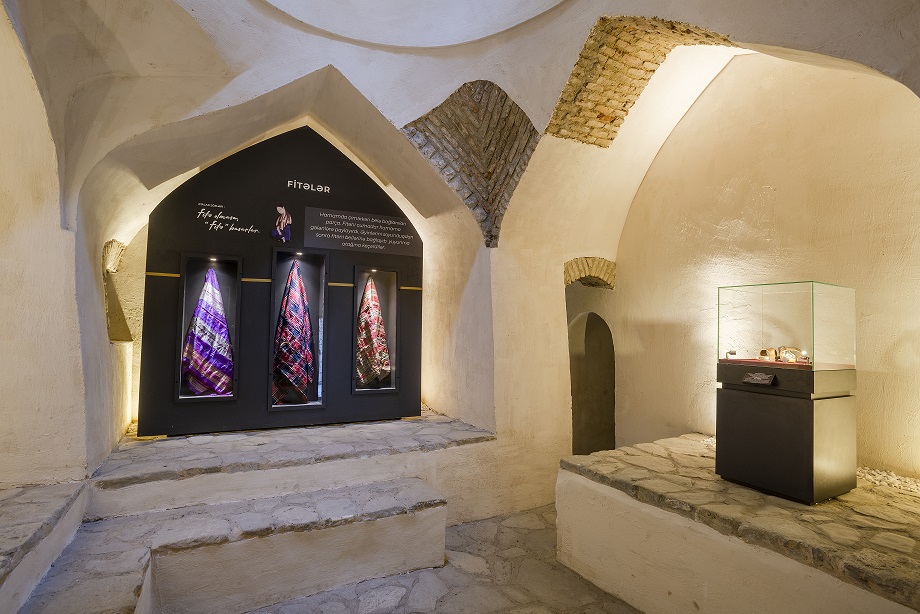
Basgal hammam: An architectural monument from the 17th century located within the territory of Basgal State Historical and Cultural Reserve, Basgal Hammam is constructed in the classic Oriental style. The bathhouse building has been taken under state protection as a local architectural monument. Its domes, adorned with plant patterns, and the precise symmetry of column elements, indicate a high level of local architectural traditions. The bathhouse was renovated in 2021 to undergo conversion into a museum. Here, it is possible to learn about Azerbaijani bathhouse culture, folk traditions, the functional structure of bathhouses (such as the furnace room “külxana”, water reservoir, private bathing room, etc.), as well as the ancient underground heating system used in this place.
Kuraband: The kuraband sewage system, operational since the early 13th century, is not only a unique engineering example from the Middle Ages, but also considered one of the most significant elements of medieval urban planning culture in Basgal. Initially, wells were dug, followed by the construction of deep covered channels. The kuraband combined several springs in Basgal into a single water and sewage network. Archaeological excavations conducted in Basgal between 2019 and 2021 revealed two kuraband systems in the square in front of Sheikh Mahammad Mosque.
Sheikh Muhammad mosque: A historic religious structure dating back to 1531, the Sheikh Mohammad Mosque is located in the upper part of the Market Square. Manuscripts belonging to the historical ‘madrasa,’ which once operated in the mosque, are currently on display by Basgal State Historical and Cultural Reserve. The building periods of Sheikh Muhammad Mosque have been determined for the first time through research works on its archaeological layers, and numerous material and cultural objects have been uncovered, studied and handed over to the museum collection of the reserve.
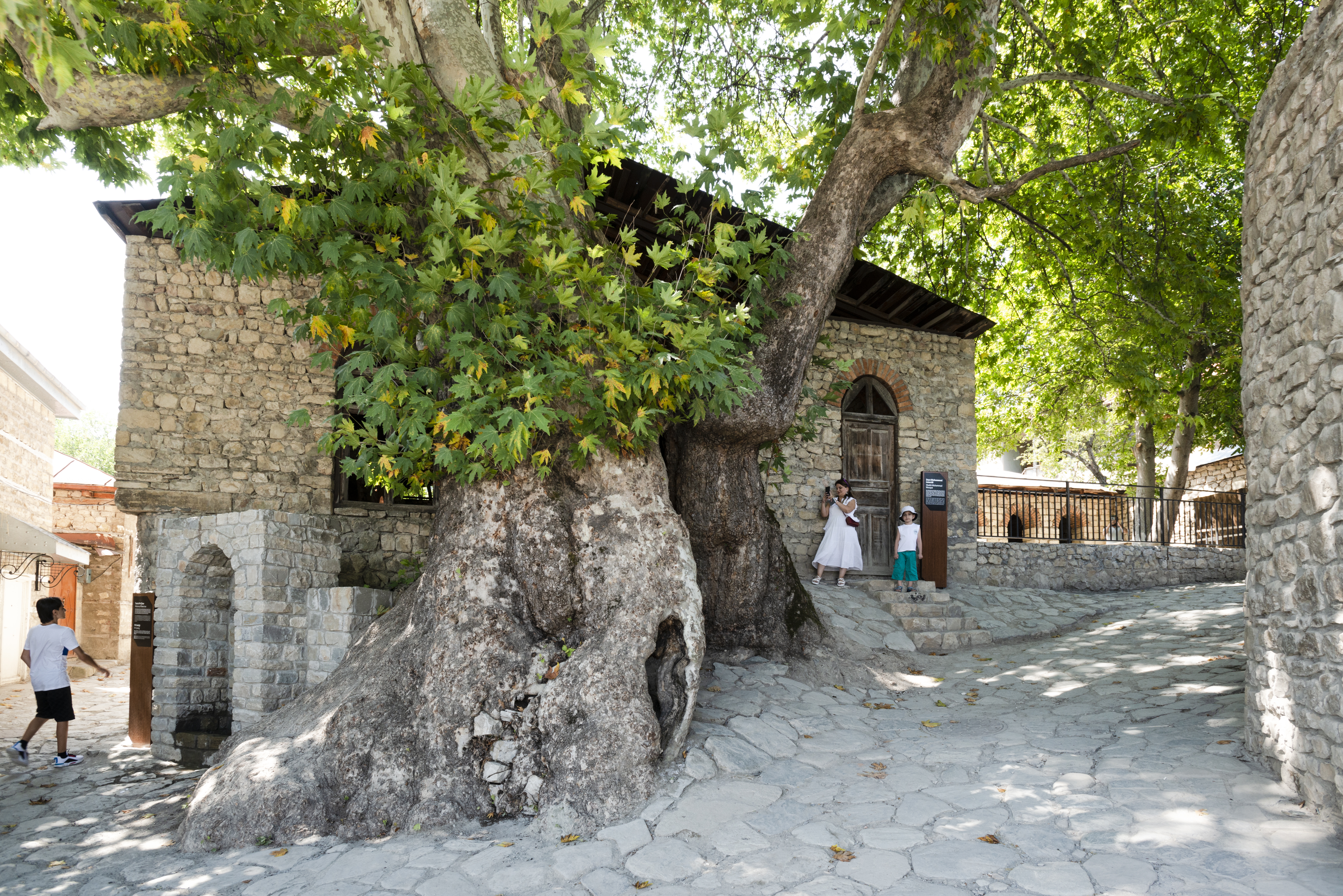
Historical Plane Tree (1563): A tree with a huge trunk and a large crest considered a sacred place by locals was planted in 1563 by Sheikh Safai, the son of Sheikh Mahammad. The following information about the plane tree was given in the inscription:

The translation of the inscription is as follows: "The Plane Tree was planted in 970 by Al Faqir Sheikh Safai, the son of Sheikh Mahammad".
Studying this inscription, placed on the auxiliary building of the Sheikh Mahammad Mosque, confirmed that it belongs to the Plane Tree. The inscription of planting a plane tree was carved with local rubble stone. The stone is 0.39 cm long and 0.27 cm wide. The edge of the stone is decorated simply. The two-line inscription was engraved in the “Naskh” script with “Suls” elements.
The year of 970 AH corresponds to the year of 1563 AD. Thus, Sheikh Mahammad built the Basqal Mosque in 1531. Thirty-two years later, in 1563, his son Sheikh Safai planted the Baskal’s famous Plane Tree.
Market square: Serving as a centre of exchange and craftsmanship until recent times, Market Square (‘Bazar Meydani’) has historically been the heart of regional trade. All streets, roads, neighbourhoods and paths emanating from houses met in this square, making it the centre of Basgal. On various days of the week, certain agricultural and craft products were sold in the square. It was also the most convenient place for the local population to discuss all public and domestic matters.
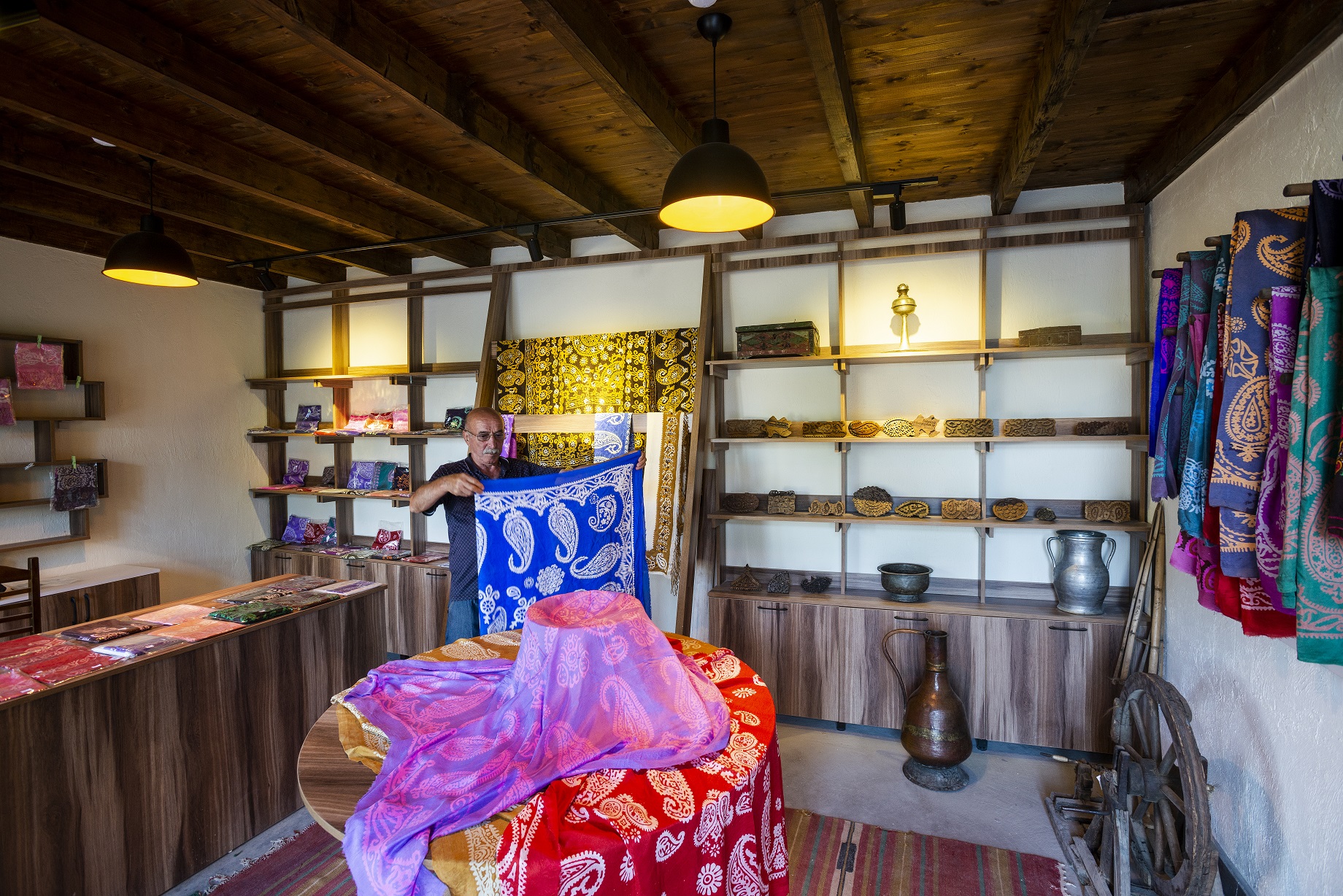
Kelaghayi: In Basgal, the art of ‘kelaghayi’, which holds a significant place in Azerbaijan’s intangible cultural heritage and system of national and spiritual values, is still alive today.
In the Middle Ages, Basgal was one of the major weaving and craft centres of the Shirvan region, with most of the population engaged in silk production. Kelaghayi made in Basgal in the 18th and 19th centuries attracted great interest in countries of the Caucasus, the East and Europe. Considered a symbol of nobility and femininity, Azerbaijani kelaghayi was inscribed on UNESCO’s Representative List of Intangible Cultural Heritage in 2014 as “Traditional art and symbolism of Kelaghayi”.
WHAT TO SEE AND DO
Kelaghayi masterclass: Try your hand at Basgal's most celebrated craft in a hands-on kelaghayi silk-making workshop led by local artisans. Leave with a deeper appreciation of this UNESCO-recognised tradition - and perhaps a creation of your own.
Hammam Museum visit: Step inside the beautifully restored 17th-century bathhouse and uncover the rituals and social customs of Azerbaijani bath culture. Interactive exhibits bring to life the ingenious kulkhana underfloor heating system and centuries of communal bathing traditions.
Cobblestone quarter walk: Wander through Basgal's ancient neighbourhoods and let the stone-paved streets, traditional workshops, and distinctive cut-corner architecture tell the story of a living medieval settlement.
Market Square experience: Soak up the atmosphere of Basgal's historic Bazar Meydani, where local vendors sell handicraft goods, souvenirs, and tradition foods – maintaining Basgal’s heritage as a regional centre of trade.
Traditional cuisine tasting: Sample the flavours of the mountains through Basgal's signature dishes at the Xırman Restaurant - from pip dolmasi and piti to locally made cheeses, mulberry molasses, and Slow Food-recognised rose petal preserves.
Silk Centre exploration: Visit the Silk Center to trace Basgal's remarkable weaving legacy, from its medieval origins as a major Shirvan craftsmanship hub to its enduring influence across the Caucasus and beyond.
DOST House Creative Centre: On the way to the Reserve drop in and discover authentic locally made goods at DOST House’s workshops in carpet weaving, pottery, coppersmithing, and textile production - a rare window into living Azerbaijani craft traditions.
Spa & wellness at “Basgal Resort & Spa”: Unwind in the mountain air with a full suite of wellness facilities at Basgal's five-star resort, including thermal water pools, sauna, steam room, massage treatments, and yoga classes. The perfect way to rest and recharge after a day exploring the village and trails.
HIKING
The Niyaldagh mountain range stretching between Basgal and Lahij has historically served both as a natural barrier and an important passage route. Remains of ancient fortresses and defensive walls built to protect this strategic area can still be seen along the mountain slopes. The Taglabiyan–Niyal Pass–Lahij, Mücü–Lahij, and Sulut–Ahan routes were among the main historical passages connecting the surrounding settlements.
Taglabiyan - Niyaldagh - Lahij Trail (11.2 km): This route begins in Taglabiyan village, located 5 km northwest of Basgal, and continues through forests and alpine pastures toward Lahij. Along the trail, visitors can see mountain springs, shepherd shelters, and the ruins of Girdiman Fortress. The Niyal mountain pass and the 2,053-meter summit are among the main scenic highlights of the route.
Mücü - Lahij Trail (10.7 km): Starting from Mücü village, 5 km northeast of Basgal, this trail passes through forest zones and mountain pastures. The route offers access to the Niyaldagh summit and several panoramic viewpoints overlooking Lahij. As one of the region’s historic mountain passages, it combines natural landscapes with cultural heritage.
Hiking routes around Sulut: Sulut and its surrounding villages offer diverse hiking opportunities through ancient settlements, forest paths, and mountain scenery. Historic fortresses, traditional village architecture, mud volcanoes, and alpine trails make the area attractive for both nature and heritage enthusiasts.
Buzkhana and Girkhotaq trail (7-8 km): This easy-to-moderate hiking route leads toward the ancient Buzkhana and Girkhotaq Fortress. Forest landscapes, fortress remains, and mountain panoramas can be enjoyed along the way.
Fit mountain trail (13 km): This moderate trail starts from Mücü village and ascends to the 1,810-meter summit of Fit Mountain. The route offers impressive views of the Greater Caucasus Mountains as well as several historic landmarks.
Sarsura - Kalazeyva - Sulut Trail (4 km): This short and comfortable walking route is ideal for experiencing village life, local architecture, and mountain landscapes. The trail connects the villages of Sarsura, Kalazeyva, and Sulut.
Mud Volcano trail (3 km): This easy hiking route leads to a mud volcano. Along the trail, visitors can enjoy river views and the peaceful atmosphere of the surrounding countryside.
WHERE TO STAY?
|
Type |
Name |
Contact |
Capacity |
Location |
|
Guesthouse |
Aydin Alasgarli |
+994 55 256 47 16 |
3 rooms, 5 beds |
Basgal settlement P9XV+7F, Basqal |
|
“Basgal” Guesthouse |
Samad Jafarov |
+994 77 609 06 09 |
7 rooms, 14 beds |
Basgal settlement |
|
Guesthouse |
Rafail Naghiyev |
+994 55 528 20 53 |
3 rooms, 7 beds |
Basgal settlement 40.747133,48.386519 |
|
Guesthouse |
Heydar Dadashov |
+994 51 375 55 10 |
2 rooms, 5 beds |
Basgal settlement 40.753224,48.390361 |
|
Guesthouse |
Baghirova Turackhanim |
+994 50 363 02 56 |
5 rooms, 10 beds |
Basgal settlement 40°44'45.8"N 48°23'17.0"E - Google Maps |
|
Hotel |
Basgal Resort & Spa |
+994 12 585 00 35 |
183 rooms, 415 beds |
https://www.google.com/maps/place/Basqal+D |
WHAT TO EAT?
Basgal cuisine is known for its rich traditional dishes prepared with meat, dairy products, and mountain herbs. Shaped by the seasons, the local cuisine reflects both village life and the natural richness of the region.
Bread: Traditional varieties include sac bread, yukha, lavash, fatir, and bread baked in clay ovens (tandir).
Herb-based dishes: Local herbs and greens are widely used in dishes such as kata, kukyu, sabzi, and dovga.
Dairy products: Milk, cheese, cream, shor cheese (a traditional soft salted curd cheese), yogurt, and qurut soup made from yogurt or buttermilk are common parts of the local diet.
Meat dishes: Piti, dolma, kebabs, jiz-biz, and roasted meat dishes are popular, while Basgal’s famous pip dolmasi (halimashi) holds a special place in local cuisine.
Rice dishes: Doshama plov and erishte plov (noodle rice) are among the region’s traditional rice dishes.
Traditional sweets: Basgal halva, shekerbura, gogal, and ballibadi are among the best-known local desserts. Basgal halva is included in the Slow Food “Ark of Taste” catalogue.
Traditional drinks: Sahlab, strawberry and raspberry sherbets, and ishgənjəbi are traditional local beverages.
Jams and molasses: Rose petal preserves, products made from wild Caucasian rosehip registered in the Slow Food “Ark of taste” biodiversity catalogue, as well as mulberry jams and molasses, are an essential part of Basgal’s culinary traditions.
HOW TO GET THERE?
Basgal is located in the Mountainous Shirvan region, approximately 160 km from Baku. The settlement can be reached both by private car and public transportation.
By car: Basgal can be reached in approximately 3–3.5 hours via the Baku-Shamakhi-Ismayilli highway.
By public transport: Regular buses operate from the Baku International Bus Terminal to Ismayilli. From Ismayilli, visitors can continue to Basgal by taxi or local transport.
WHEN TO VISIT?
Spring (March-May): A perfect season for hiking and experiencing village life, with blooming flowers and lush greenery.
Summer (June-August): Cool mountain air and beautiful natural landscapes make Basgal an ideal summer destination.
Autumn (September-November): Colorful forests, harvest season, and mild weather create a unique atmosphere.
Winter (December-February): Snow-covered mountain scenery and a peaceful environment offer a charming winter experience.
Best season for hiking and outdoor activities: April to October.
RESERVE POLICIES